 Khushi RawatUpdated 20 Mar 2026 06:34 PM IST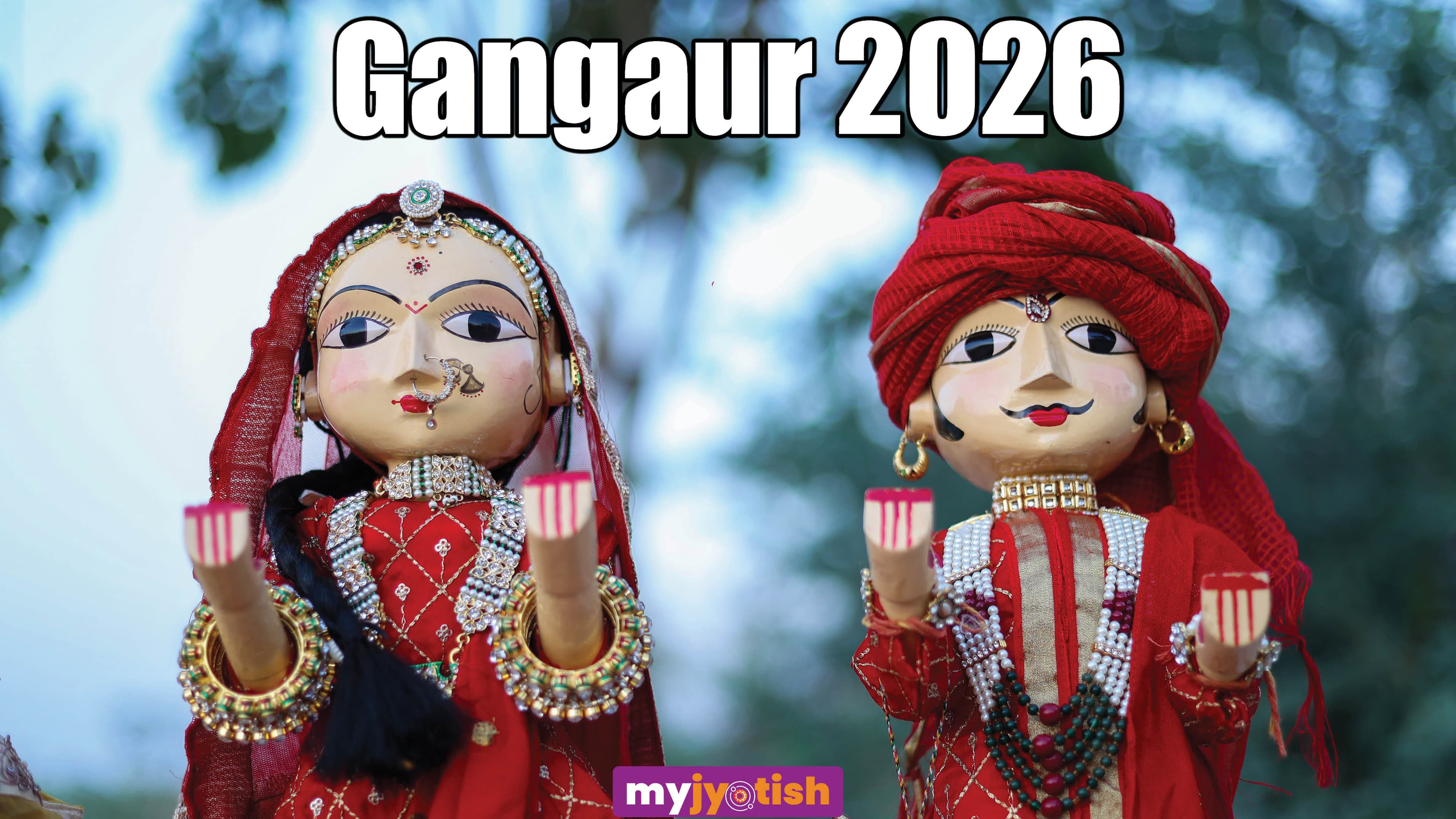
In Hindu Dharm, the Gangaur Vrat has a major significance and is observed primarily by married women. This fast is celebrated on the third day of the Shukla Paksha of the Chaitra month, and this day is also known as Tritya Teej. The word "Gangaur" is derived from two distinct terms, "Gan" which refers to Lord Shiva and "Gaur" which signifies Goddess Parvati. Worshipping Lord Shiva and Goddess Parvati holds special significance on this auspicious day. Click here to read your daily horoscope.
The Gangaur Vrat is especially observed by married women for the longevity of their husbands and a happy married life. Unmarried women also observe this fast, as it is said that it helps them attain their desired life partner. Performing special rituals and worshipping on this day brings the blessing of Lord Shiva and Goddess Parvati.
In 2026, the Tritiya Tithi will begin on 21st March and will end at 11:56 PM on the same day. According to the Udaya tithi, the Gangaur Vrat will be observed on 21st March 2026.
On the day of the Gangaur, one should take a bath early in the morning and wear clean clothes. Place the idols of Lord Shiva and Goddess Parvati made of clay. These idols are adorned with beautiful clothes, after which they are worshipped. During the puja, offerings of Shringar such as kajal, bindi, and bangles, to Goddess Parvati. Also, offer sandalwood paste (Chandan), akshat, roli, kumkum, and durva grass to both Lord Shiva and Goddess Parvati.
Light a diya and incense sticks, and offer Churma as bhog. For the Gangaur puja, a special platter (Thali) is prepared, which contains a silver coin, betel nut, betel leaf, milk, yogurt, Gangajal, turmeric, kumkum, and durva grass. A sacred mixture is created with these items, known as Suhag Jal. This sacred water is used to perform the Abhishek of Lord Shiva and Goddess Parvati, and it is sprinkled over all the members of the household.
Connect with India's best astrologers





 My Jyotish
 My Jyotish
 My Jyotish